Brown 46 / Issue No. 01
Our
Magazine
A journal of places, moments, and the compositions they became. Not a catalog of products, but a record of the streets, the light, and the hours that turned into scent.
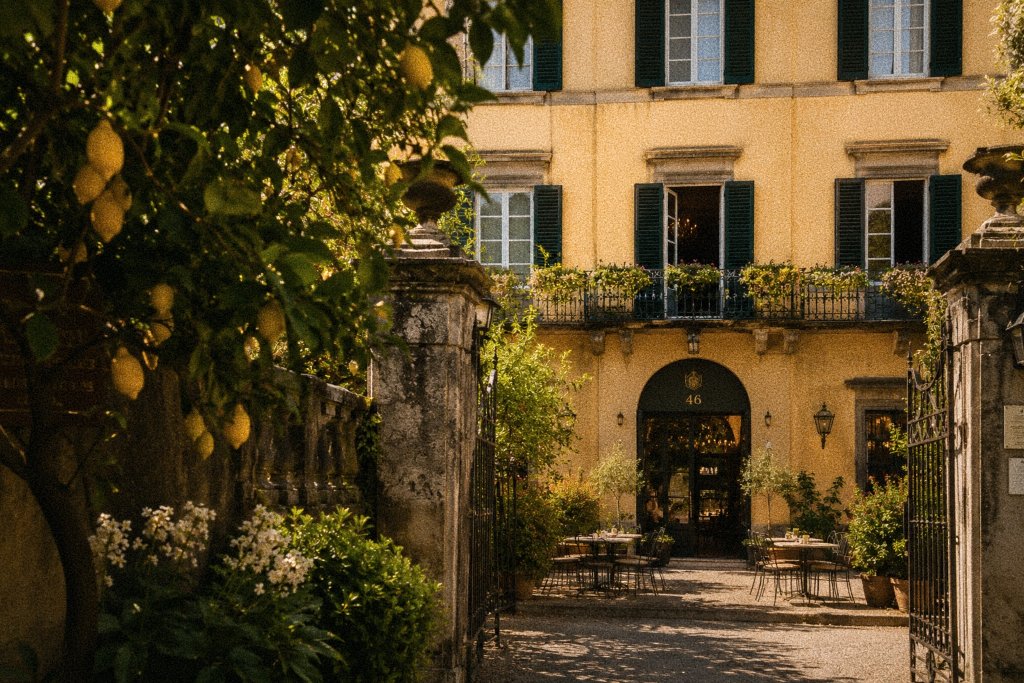
Limonaia di Lucca
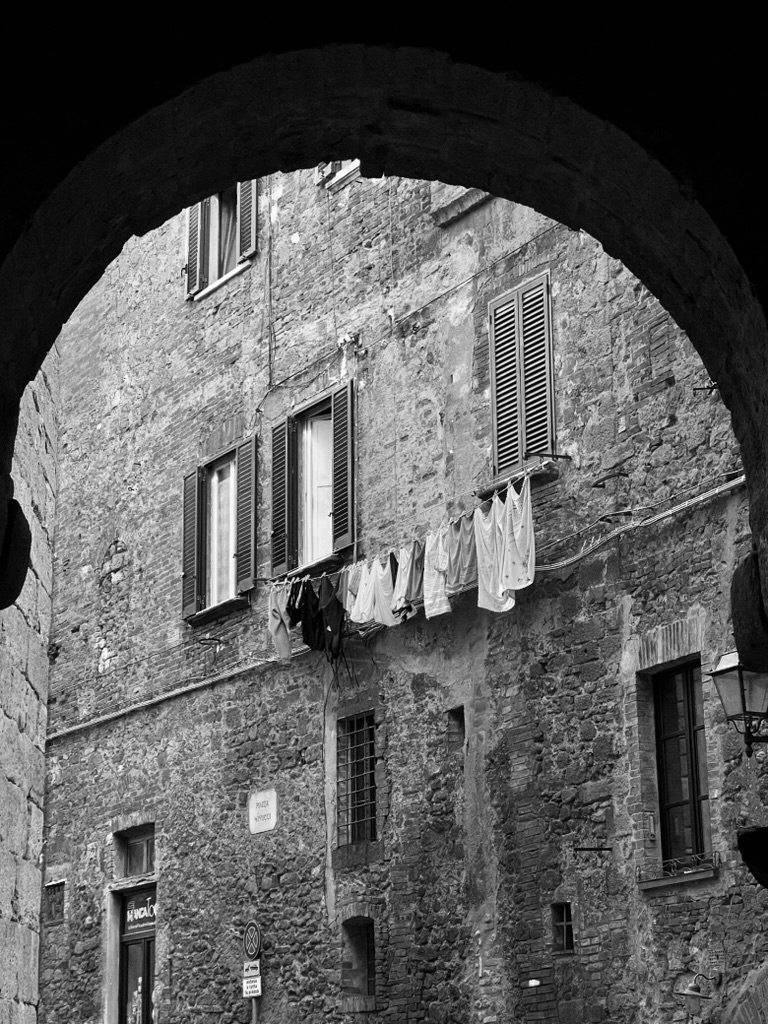
Stillness in sunlight. The world reduced to scent and warmth.
Field Notes
We rented a villa outside Lucca in October, when the tourists had gone and the lemon trees were being moved into the limonaia for winter. He woke before me every morning and sat in the greenhouse with his notebook. I'd find him there at nine, surrounded by bitter citrus and warm stone, writing formulas instead of memories. By the third day I stopped asking what he was working on. I already knew. The air in that room was something neither of us had smelled before, not just lemon, but the oil of the rind, the wet mineral of old stone, the green of crushed leaves underfoot. He tried for weeks after we came home to recreate it. The version that finally worked was the one where he stopped trying to make it pretty and just made it honest.
43.8453° N, 10.5024° E
A Place in Time
The Limonaia di Lucca is nestled within the walled city of Lucca, a place frozen between medieval ambition and Renaissance grace. The city's famous walls, built in the 16th century and never breached, now serve as a promenade shaded by ancient plane trees. The lemon houses of the surrounding villas were not merely gardens; they were symbols of wealth, scientific curiosity, and an obsession with beauty that defines Tuscan culture to this day.
Marché Mouffetard
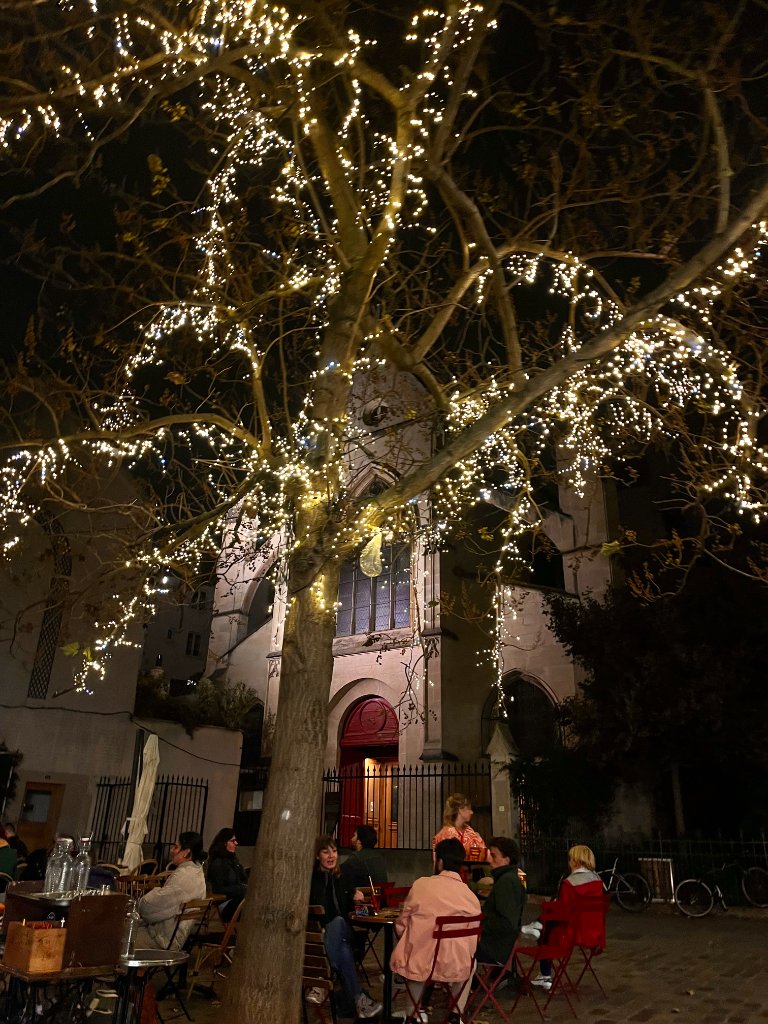
Ancient rhythm beneath modern light.
Field Notes
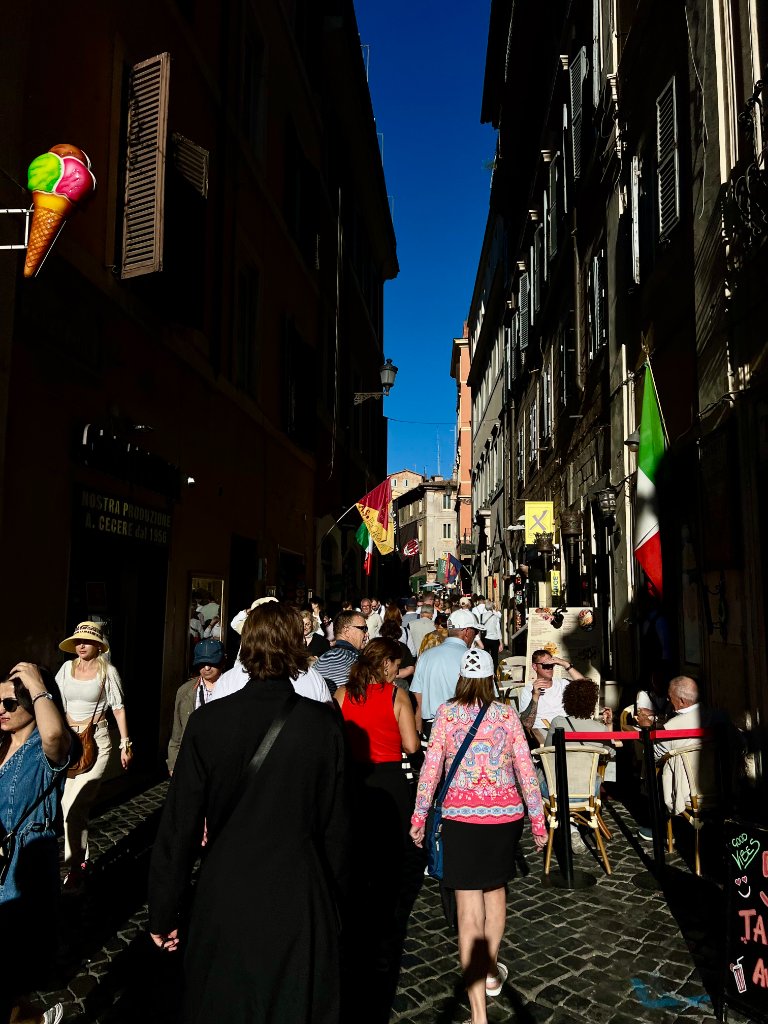
Mouffetard was our street. We lived above a cheese shop for six months, and every morning the market woke us before the alarm. The spice vendor was an old Algerian who never smiled but always gave us extra cardamom. The cobblestones stayed wet long after the rain stopped, and the cold stone smell mixed with pepper and bread in a way that doesn't exist anywhere else in Paris. We fought on that street, we made up on that street, and when we finally left, he stood in the middle of the road at noon and said he would build a scent from it. I thought he was being dramatic. He was. But he was also right.
48.8404° N, 2.3498° E
A Place in Time
Rue Mouffetard is one of the oldest continuously inhabited streets in Paris, following the path of the ancient Roman road Via Ostia. The market has operated here since the Middle Ages, drawing spice traders, wine merchants, and street vendors for over 800 years. Hemingway drank in the cafés nearby. Students from the Sorbonne still crowd its terraces on Sunday mornings. The street has survived revolutions, wars, and Haussmann's renovation of Paris, its crooked line a refusal to straighten for anyone.
Pienza Atelier
Golden hour held in place.
Field Notes
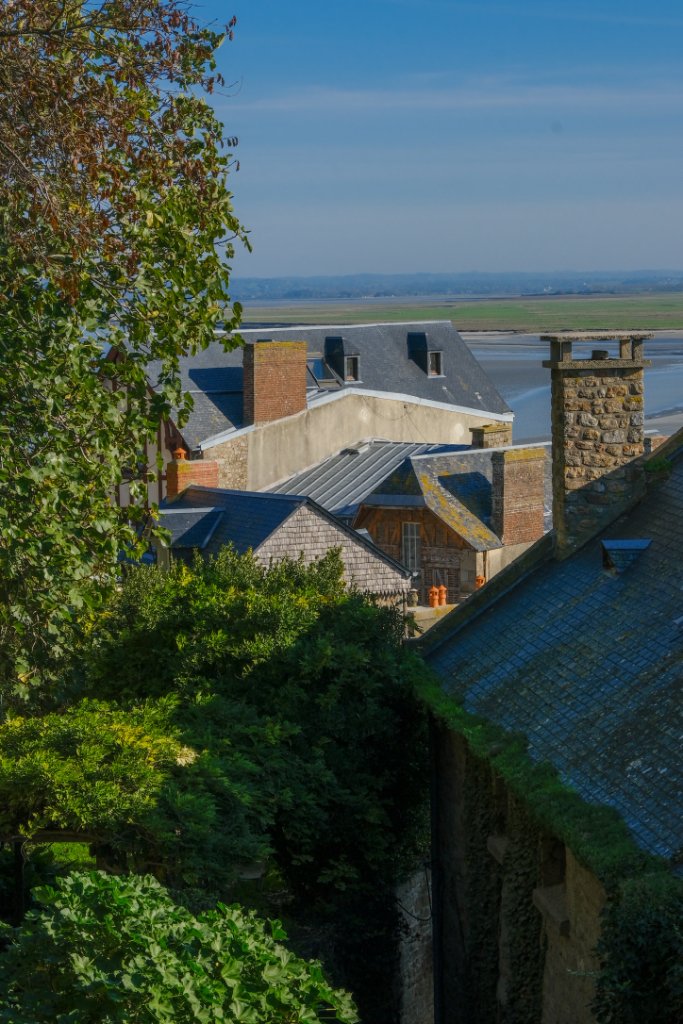
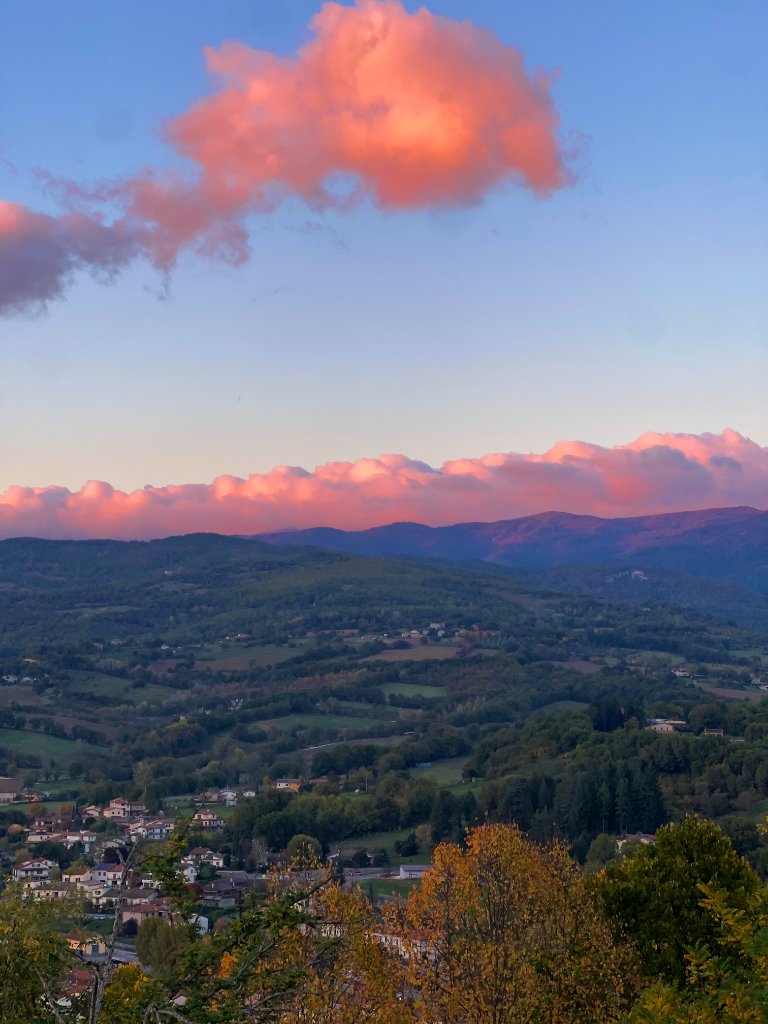
We came to Pienza with no plan and stayed four days. The town is tiny, you can walk it in twenty minutes, but the light at five in the afternoon is something I've never seen replicated. We sat on the wall behind the cathedral and watched the Val d'Orcia turn gold. There was linen drying on a line below us, saffron cooking somewhere nearby, and the stones beneath us still warm from the full day of sun. He didn't say anything for an hour, which is how I knew he was composing. When we got home, he built this one in three days. The fastest he's ever worked. He said the formula was already finished on that wall, he just had to translate it.
43.0765° N, 11.6789° E
A Place in Time
Pienza was reborn in 1459 when Enea Silvio Piccolomini, later Pope Pius II, commissioned the architect Bernardo Rossellino to transform his birthplace into an ideal Renaissance city. The result is a UNESCO World Heritage Site: a cathedral, palace, and town hall arranged in perfect harmony on a narrow ridge above the Val d'Orcia. The city has barely changed in 500 years. The valley below it, all rolling cypresses and ochre fields, has become the defining image of Tuscany itself.
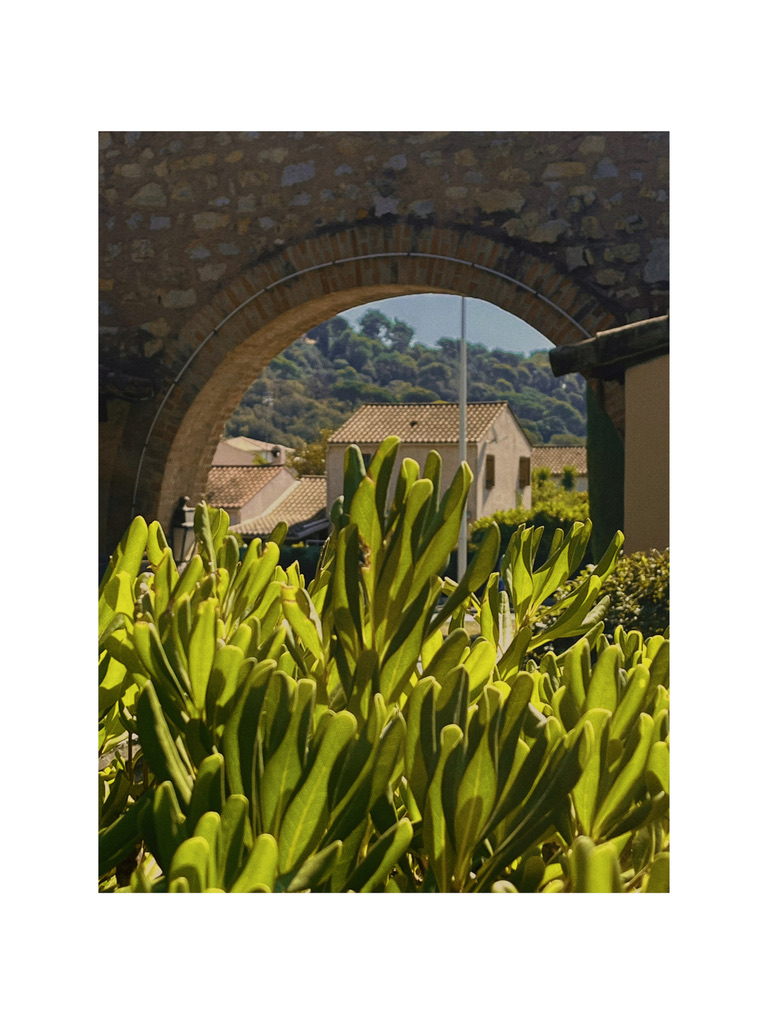
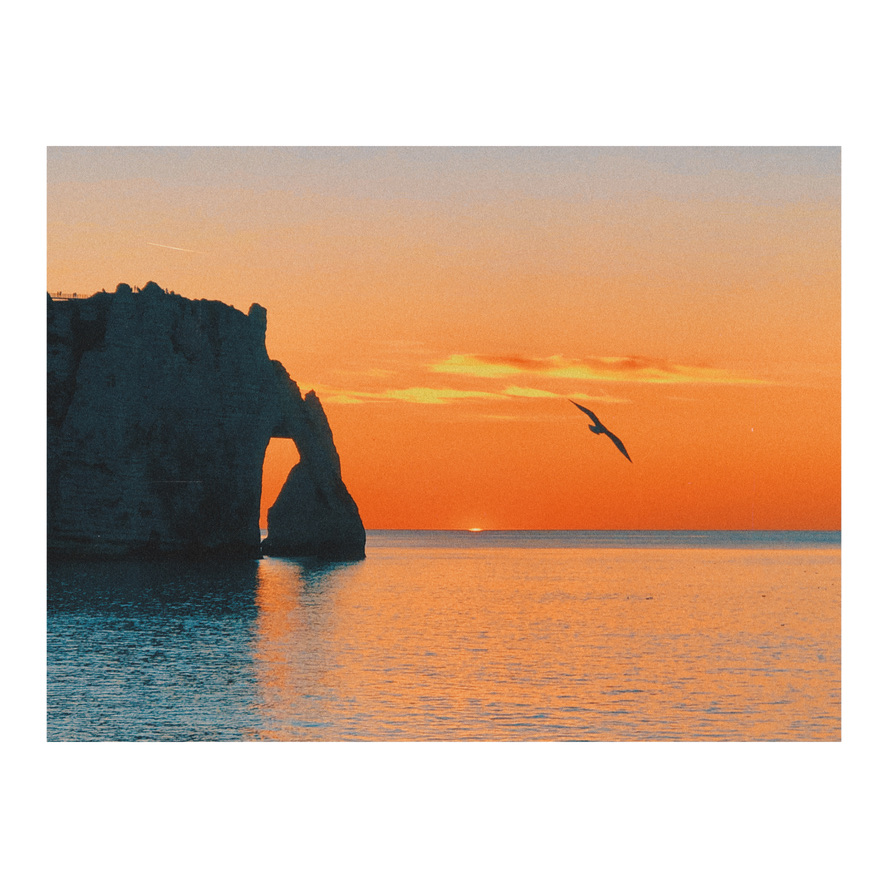
Etretat Cliffs
The silence before everything begins.
Field Notes
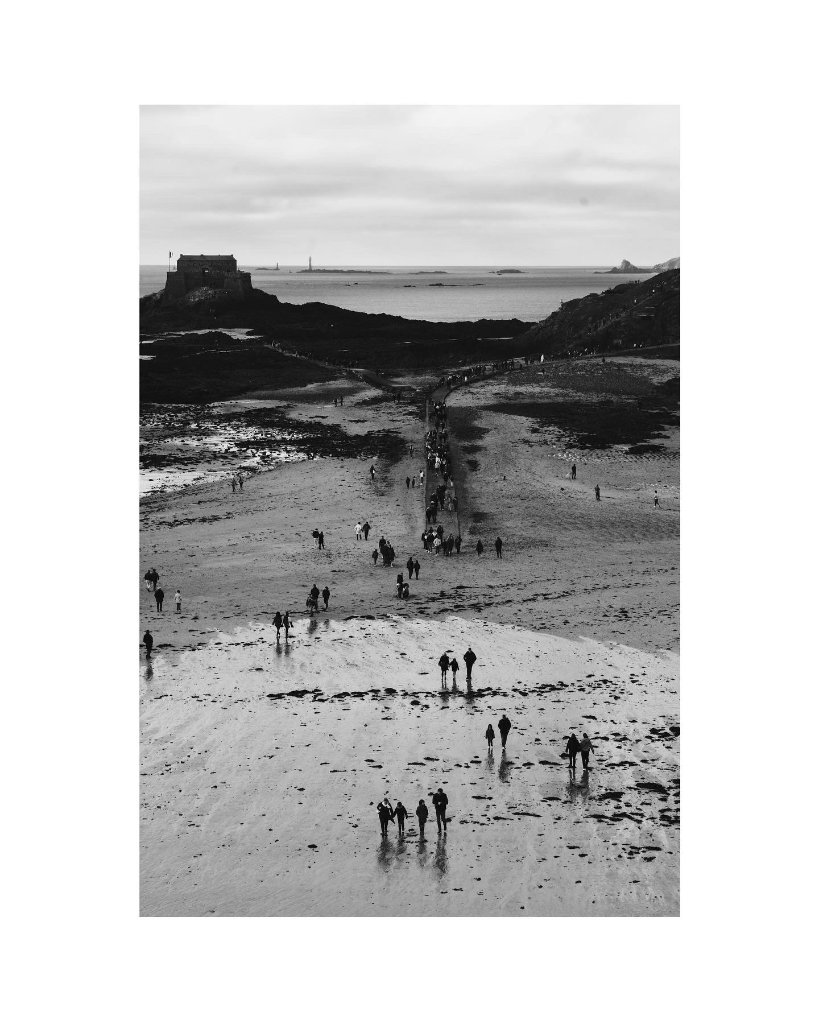
Étretat was my idea. I wanted to see the cliffs in winter, when no one was there. He thought I was insane. We drove at four in the morning from Rouen and arrived at the beach before dawn, shivering, the chalk arches barely visible in the dark. When the sun came up, the mist didn't lift, it just turned white and silver and stayed. The air was so cold it hurt to breathe, but it smelled like nothing I'd encountered: salt without sweetness, chalk without dust, the ocean at its most stripped-down. He stood on the pebbles with his hands in his pockets and didn't move for twenty minutes. On the drive back he said, 'I think this one might be the hardest.' It took him four months.
49.7070° N, 0.2012° E
A Place in Time
The cliffs of Étretat are among the most painted landscapes in history. Monet returned here over thirty times between 1883 and 1886, capturing the light as it changed across the chalk arches. The town itself is a 19th-century resort, built when the Parisian elite discovered the Normandy coast, but the cliffs are ancient, formed over millions of years from compressed marine sediment. The Falaise d'Amont and Falaise d'Aval, the two great arches, have watched the English Channel change everything around them while remaining absolute.
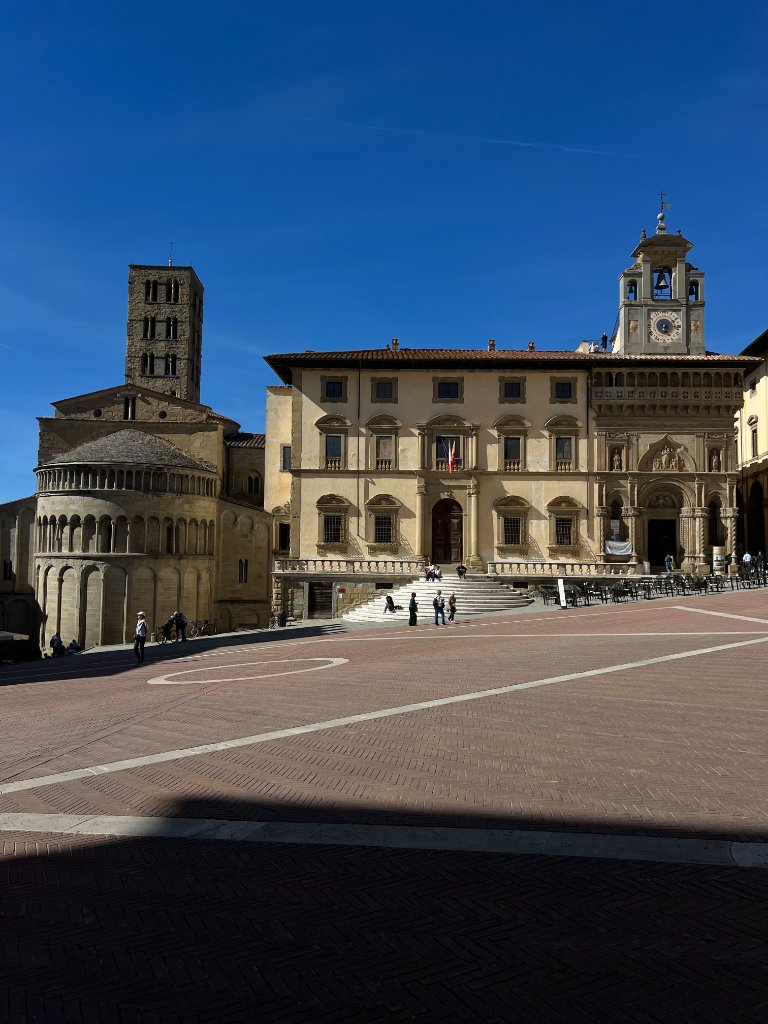
Cookies
We use cookies to operate and secure our website, remember your preferences, and understand how visitors use our pages. See our Cookie Policy for details.